
If I Was Serious About Buying in BC in My 20s, I Would Intentionally Choose the Kootenays — And Here’s Why
There’s been a lot of conversation in BC recently about the 2025 Living Wage.
According to the Living Wage for Families BC 2025 Report, a full-time worker now needs:
- $27.85/hour in Metro Vancouver
- Between $21.55 and $29.60/hour across BC
- While BC’s minimum wage sits at $17.85/hour
Most of that conversation focuses on survival.
But if I was in my 20s, working full-time, and earning at or above living wage, I wouldn’t be asking how to survive.
I’d be asking where in BC my income actually gives me leverage.
Step One: Understand Where You Sit Regionally
In major centres like Metro Vancouver, Victoria, or Kelowna:
- Incomes tend to be higher
- Economic opportunity is broader
- Housing demand is strong and consistent
But those markets also carry higher price points and more competition.
That doesn’t make them “bad” markets.
It simply means that even solid household incomes can feel compressed once housing costs are factored in.
For some buyers, that tradeoff makes sense — especially if career trajectory is tied to those locations.
For others, it creates tighter margins.
And that’s where regional alignment starts to matter.
Where the Kootenays Sit
Based on Kootenay Economic Region data (2015–2023), the most recent reported median household income sits at approximately:
$88,400 (2024)
Median means half of households earn less, half earn more.
So if your household earns:
- $90,000 → slightly above regional median
- $110,000 → meaningfully above
- $130,000+ → well above the middle
That positioning changes everything.
Because housing markets are ultimately built around what the median household can sustain.
If you’re operating well above that number, you’re not chasing the market — you’re aligned with it.
What Living Wage Means in Real Terms
If someone earns $27/hour full-time:
$27 × 40 hours × 52 weeks
≈ $56,160 per year (gross)
Two incomes at that level:
≈ $112,000 household income
That’s already comfortably above the Kootenay regional median.
And that’s based on living wage — not high-income earners.
So if I were in my 20s earning $110K–$130K household income, I’d want to know:
What does that realistically buy here?
What the Market Actually Looks Like
Here are the recent Kootenay averages:
|
Property Type |
Average Price |
Minimum Down Payment* |
|
Townhouse |
~$457,781 |
~$22,900 (5%) |
|
Duplex |
~$490,725 |
~$24,500 (5%) |
|
Detached |
~$598,101 |
~$34,800 (tiered 5%/10%) |
(Source: https://interiorrealtors.xposureapp.com/)
*Minimum down payment based on insured mortgage rules: 5% on the first $500,000 and 10% on the portion above $500,000 up to $999,999.
(Source: https://www.ratehub.ca/)
Let’s pause there.
Townhouse ownership starts at under $23,000 down.
Detached homes begin at under $35,000 down.
That’s not a fantasy number.
It’s a structured savings target.
And in many major BC urban centres, detached ownership isn’t even part of the early conversation anymore.
In parts of the Kootenays, it still is.
That’s leverage.
Why I’d Choose the Kootenays — Intentionally
If I was serious about buying in BC before 30, I would look closely at:
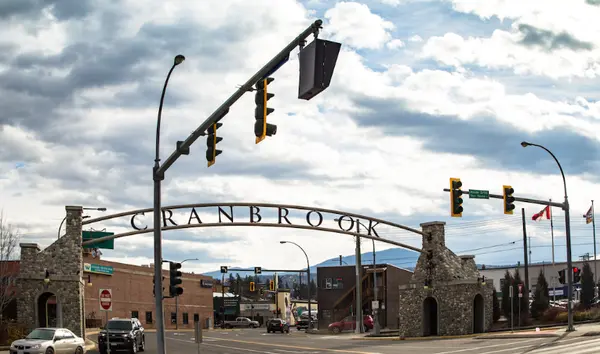
- Cranbrook
- Kimberley
- Fernie
- Invermere
- Creston
- Other East and West Kootenay communities
Here’s why.
You’re participating in a regional economy — not a global one.
In many Kootenay markets:
- Housing values move more closely with regional wages
- Demand is tied to employment and lifestyle migration
- Price growth tends to be steadier
- Commutes are short
- Lifestyle quality is high
When income and housing values move within the same ecosystem, ownership becomes strategic instead of desperate.
That’s a big difference.
If I Was 25 in the Kootenays, Here’s Exactly What I’d Do
1. Save With a Target, Not a Guess
If I saved:
$1,500–$2,000 per month
= $18,000–$24,000 per year
In two years:
$36,000–$48,000 saved
That covers:
- Minimum down payment
- Closing costs
- Emergency reserves
That’s a realistic 24-month runway.
Not 5–7 years.
2. Buy Below My Maximum Approval
I wouldn’t stretch to the bank’s ceiling.
Instead, I’d prioritize:
- Manageable payments
- Room to invest
- Emergency reserves
- Flexibility
3. Think 7–10 Years, Not 2–3
Ownership in regional BC communities is about:
- Stability
- Predictability
- Equity building
Not flipping.
If you stay long enough, time does the heavy lifting.
The Real Question Isn’t “Is BC Affordable?”
It’s:
- Where in BC does my income still have leverage?
- Where can I buy without maxing out?
- Where do regional wages still align with regional housing?
If I wanted to buy in BC before 30 — and I cared about long-term stability — I would seriously consider building my first chapter in the Kootenays.
Not because it’s “cheap.”
But because the structure still makes sense.
Want to See What That Actually Looks Like?
Theory only goes so far.
If you’d like to explore what homes currently look like across the Kootenay region, you can browse available listings here:
Also, If you'd like to be connected with one of our preferred mortgage brokers, just ask and we can get working on your home ownership plan together!
Categories
Recent Posts





GET MORE INFORMATION